Landfill-to-RNG is no longer a future-facing idea. It is becoming a larger part of how landfills think about operations, energy recovery, and long-term site economics.
As of December 2025, industry-wide U.S. biogas capture capacity reached 780.7 Bcf per year. Landfill gas remains the largest contributor, with 599 LFG facilities in operation and landfill gas production capacity reaching 559 Bcf per year.
That kind of momentum changes the conversation for landfill operators.
When landfill gas is viewed only as a compliance or emissions-management issue, daily cover may be treated as a routine operating requirement. But when landfill gas becomes part of a renewable natural gas strategy, everyday decisions at the working face start to carry more business value.
Daily cover is one of those decisions.
For sites producing landfill gas, evaluating RNG, or planning future gas recovery improvements, the question is not only whether the waste is covered at the end of the day. The better question is whether the daily cover strategy is helping or hurting operational consistency, airspace preservation, methane capture, and long-term revenue potential.
That is where TIEROC® Alternative Daily Cover can play an important role.
RNG Growth Is Putting More Focus on Landfill Operations
RNG projects depend on more than gas collection infrastructure. They also depend on steady, practical landfill operations.
Operators still need to manage compaction, traffic flow, weather delays, working-face access, cover placement, nuisance control, and airspace utilization. Those issues may seem operational, but they can affect the larger economics of a landfill gas or RNG program.
As the RNG market grows, small inefficiencies can become bigger problems.
Soil and rock have long been used as daily cover materials, but they can consume valuable airspace, add weight, slow placement, and create challenges in wet, snowy, or freeze-thaw conditions. When operations are already under pressure, traditional daily cover can become another point of friction.
For RNG-focused sites, that friction matters.
A landfill that wants steadier gas recovery needs consistent daily operations. That includes a daily cover approach that helps crews move efficiently, apply material cleanly, and preserve as much usable airspace as possible.
Daily Cover Is More Than a Compliance Step
Daily cover is required for a reason. It helps control litter, scavenging, dust, and other nuisance conditions that matter to regulators, inspectors, site teams, and surrounding communities.
But daily cover can also influence operational performance.
The wrong cover strategy can use up airspace, create muddy working conditions, increase hauling needs, slow crews down, and make the end-of-day process more difficult than it needs to be.
The right cover strategy can support compliance while also improving efficiency.
That is why Alternative Daily Cover deserves a closer look as RNG investment grows. ADC gives landfill operators a way to meet daily cover needs while reducing some of the challenges associated with traditional soil or rock.
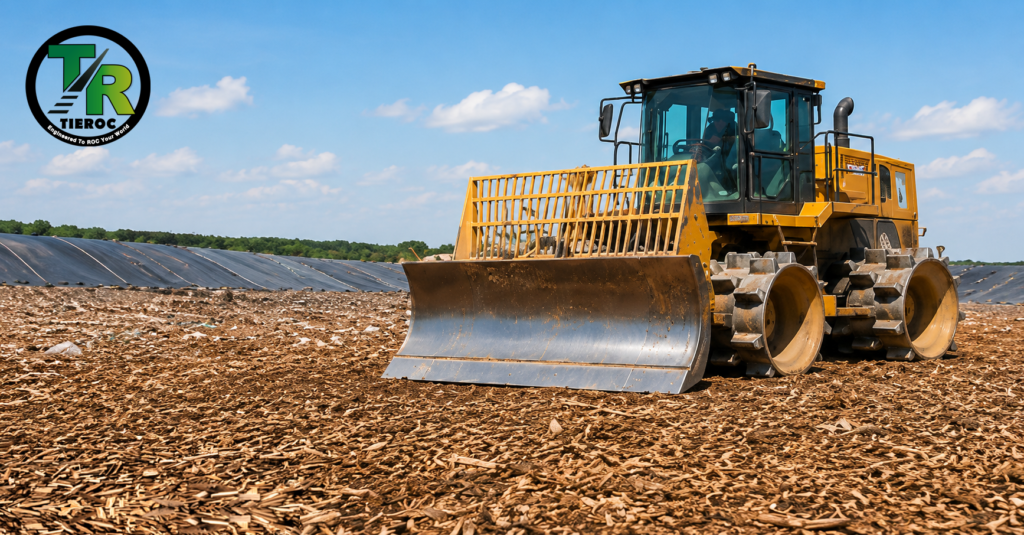
TIEROC ADC is engineered from clean, recycled wood and designed for practical landfill use. It applies cleanly and consistently, helps preserve airspace, and supports the operating conditions needed for steadier methane capture.
Why Airspace Preservation Matters to RNG Economics
Airspace is one of a landfill’s most valuable assets.
Every layer of soil or rock used as daily cover takes up space that could otherwise be used for waste placement. Over time, that can affect capacity, site life, and profitability.
For landfills with RNG on the roadmap, airspace preservation becomes even more important. More efficient use of space can support the long-term economics of the site while helping operators align daily cover with energy recovery goals.
TIEROC ADC gives operators a lightweight alternative to traditional cover materials. By reducing reliance on heavy soil or rock, TIEROC helps landfills preserve airspace while still supporting daily cover performance.
That matters because RNG success is not only about what happens at the gas collection system. It is also about how efficiently the landfill is operated every day.
Operational Consistency Supports Steadier Methane Capture
Methane capture depends on the conditions inside the landfill and the consistency of the systems built around it. While no daily cover material operates alone, working-face practices can contribute to the broader performance environment.
- Consistent placement matters.
- Clean application matters.
- Weather resilience matters.
- Airspace efficiency matters.
TIEROC ADC helps operators create a more reliable daily cover routine. It is designed to perform in real landfill conditions, including the wet, cold, and muddy conditions that can make soil and rock difficult to manage.
When crews can keep moving, cover more efficiently, and reduce operational slowdowns, daily cover becomes more than a required task. It becomes part of the site’s performance strategy.
Turning Daily Cover Into an Energy and Revenue Asset
The growth of landfill-to-RNG is creating a shift in how operators think about daily decisions.
For years, daily cover was viewed primarily through a compliance lens. That is still essential. But as RNG projects expand, daily cover can also be evaluated through an operational and economic lens.
A stronger ADC strategy can help operators:
- Preserve valuable landfill airspace.
- Support steadier methane capture conditions.
- Reduce reliance on soil and rock.
- Improve working-face efficiency.
- Maintain cleaner placement in tough weather.
- Support compliance-focused daily operations.
- Strengthen the business case for RNG and landfill gas recovery.
TIEROC ADC is built for that shift. It helps operators turn a daily requirement into a practical performance tool that supports compliance, airspace, methane capture, and renewable energy goals.
Why Now Is the Right Time to Reevaluate ADC
The landfill gas industry is growing, and the numbers show real momentum. More landfill gas projects are coming online. More operators are evaluating RNG. More landfill gas capacity is being developed.
That growth makes daily cover strategy more important, not less.
If a site is still relying heavily on soil or rock, now is a good time to ask whether that approach is supporting the future of the landfill or simply maintaining the status quo.
For landfills focused on RNG, daily cover should be part of the planning conversation. The cover material used every day can affect airspace, productivity, weather resilience, and the consistency of working-face operations.
TIEROC ADC gives operators a cleaner, more efficient alternative designed to support the next phase of landfill performance.
Ask About a Trial and Cost Comparison
If your landfill is evaluating ADC options, planning for RNG, or looking for ways to preserve airspace, TIEROC can help.
A trial and cost comparison can show how TIEROC ADC may fit into your daily operations, support compliance-minded placement, and strengthen the connection between daily cover and long-term site performance.
Landfill-to-RNG is growing fast. Your daily cover strategy should be ready to grow with it.
Learn more about TIEROC: https://www.tieroc-usa.com/
Contact TIEROC:
Greg Kutschke, EVP
(847) 426-6354
Greg@mwcompanies.com


